
2026 National HIV/AIDS and Aging Awareness
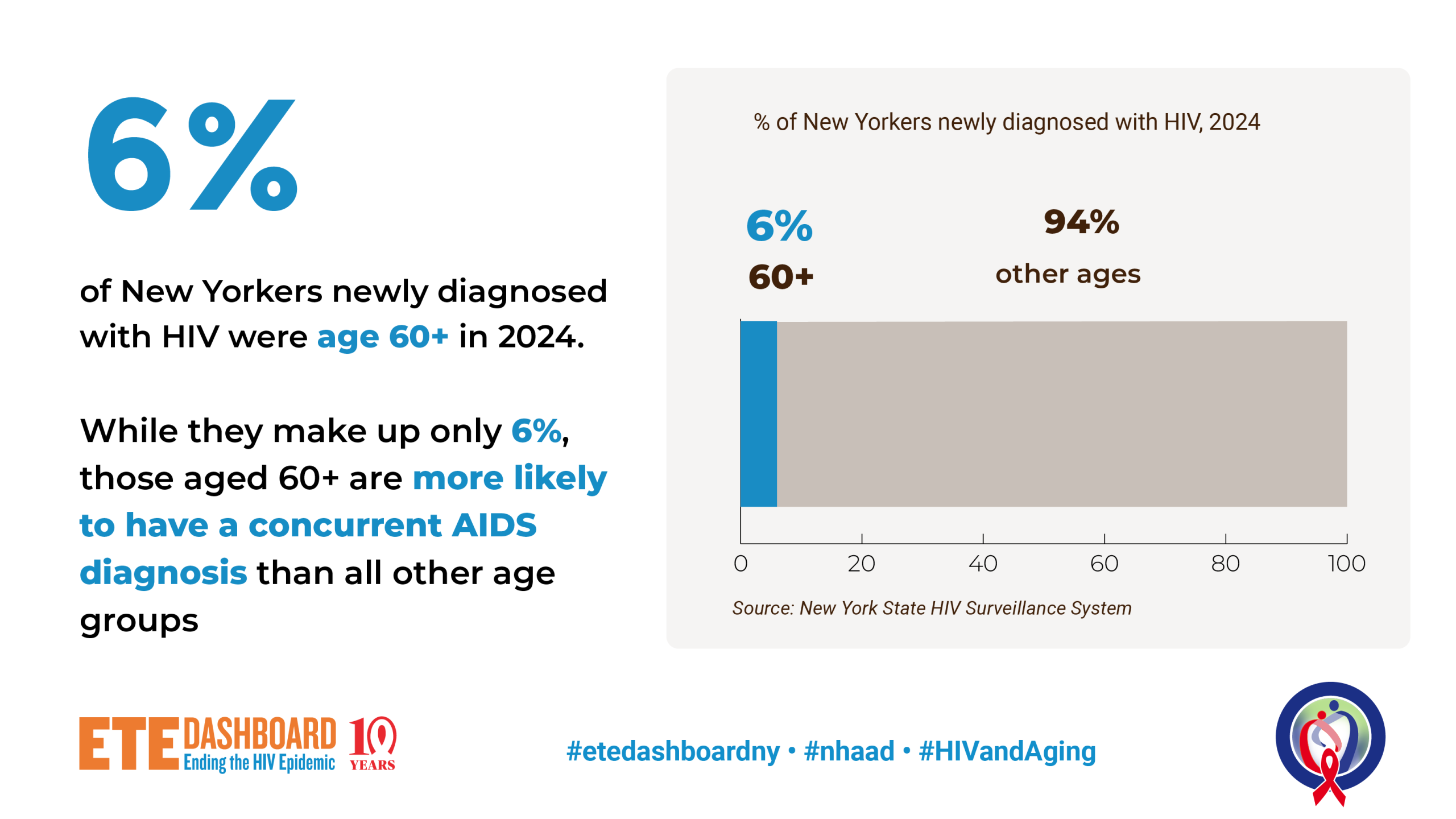
Every September 18, National HIV/AIDS and Aging Awareness Day turns our attention to a group that the HIV conversation often overlooks: older adults. In 2024, New Yorkers aged 60 and older accounted for just 6% (163/2,552) of all new HIV diagnoses statewide. Despite this relatively small proportion, higher rates of concurrent HIV/AIDS diagnoses in this population are concerning.
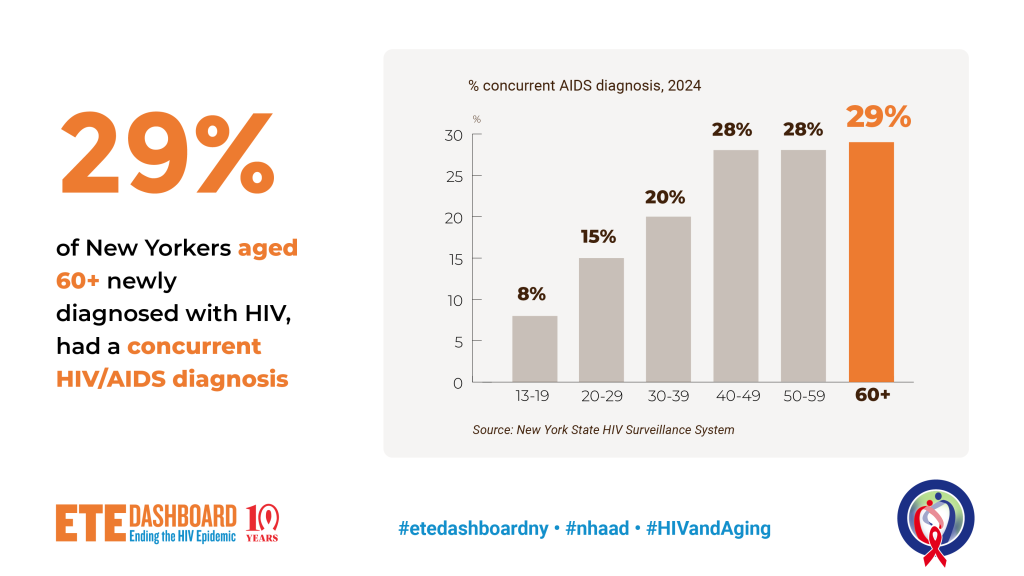
Among New Yorkers newly diagnosed with HIV in 2024, 29% of those aged 60 and older had a concurrent HIV/AIDS diagnosis, meaning HIV had progressed to AIDS within one month of HIV diagnosis, compared to 28% of those aged 50–59 and 40–49, 20% of those 30-39, 15% of those 20-29, and 8% of 13–19 year olds.
There are several reasons why the likelihood of a late diagnosis rises with age, two of which are highlighted here:
- Older adults have consistently lower CD4 counts at seroconversion and a steeper rate of CD4 decline, meaning an equivalent delay in detection yields more advanced disease at the point of diagnosis [1].
- Evidence suggests that HIV testing among older adults remains low because both clinicians and patients perceive them to be at low risk, and early HIV symptoms are frequently attributed to aging or to existing comorbidities rather than prompting an HIV test [2] . After acute infection (the initial stage of HIV infection), HIV enters a chronic stage in which people often have no HIV-related symptoms and which, without diagnosis and treatment, will eventually progress to AIDS. [3]. Therefore, people who get tested less frequently are more likely to be diagnosed at a later stage of infection when a concurrent AIDS diagnosis is more probable.
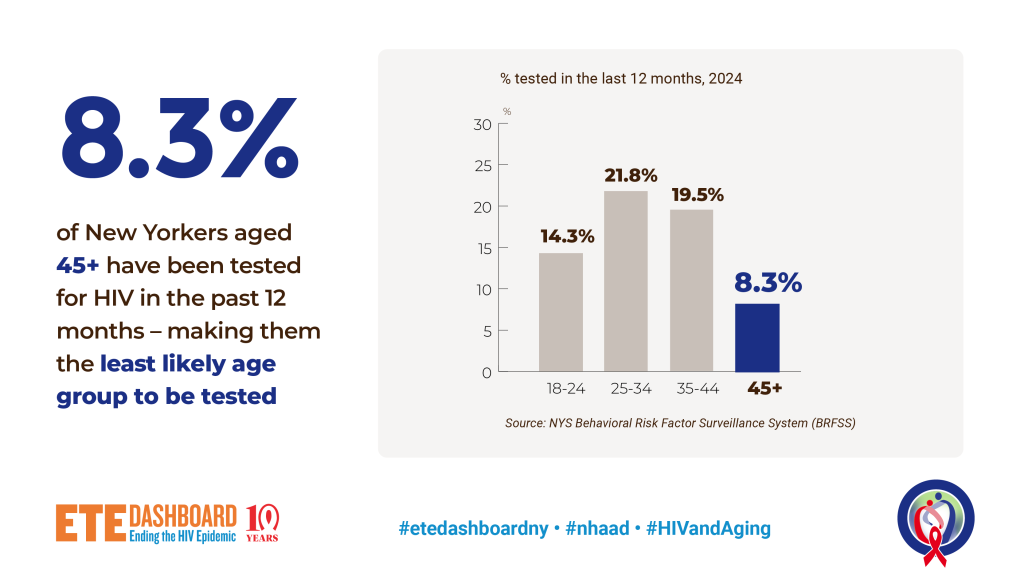
In 2024, 8.3% of New Yorkers aged 45 and older reported an HIV test in the prior 12 months, the lowest of any age group, compared with 21.8% of 25–34 year olds and 19.5% of 35–44 year olds. While national screening guidelines carry an upper age limit (the CDC recommends routine opt-out HIV screening for patients aged 13–64), New York State went further in 2016 and amended Public Health Law §2781 to remove the previous upper age limit of 64. New York State law now requires that HIV testing be offered at least once as a routine part of care to every patient aged 13 or older receiving primary care, as well as to hospital inpatients and emergency department patients.
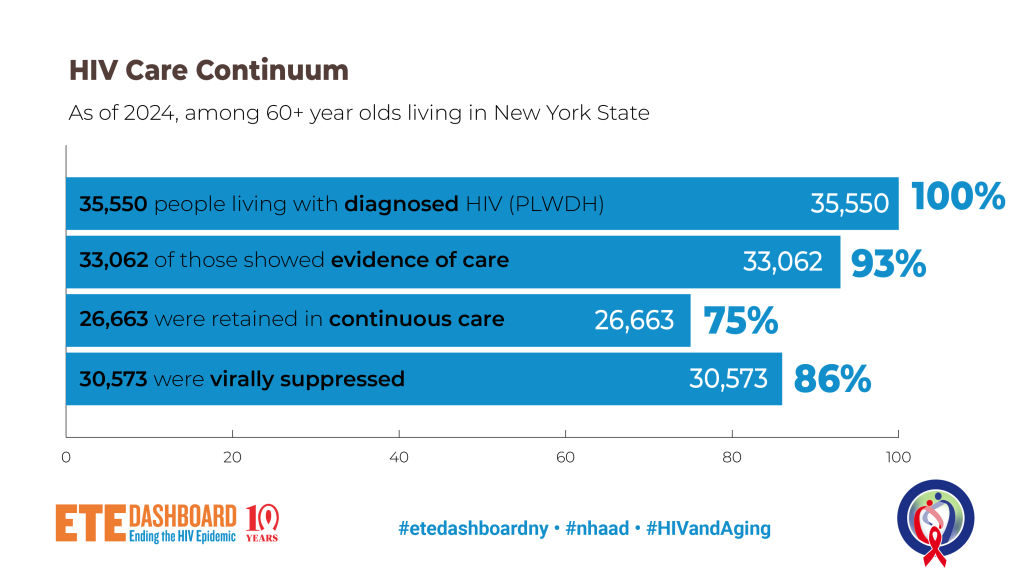
As of 2024, 35,550 New Yorkers aged 60 and older were living with diagnosed HIV. Of those, 93% showed evidence of care, 75% were retained in continuous care, and 86% were virally suppressed.
Ending the epidemic means ending it at every age. HIV testing is quick, often free, and widely available across New York. Click here to find a testing provider near you or explore more HIV testing data here.
References:
[1] NIH Clinical Guidelines, HIV and the Older Person
[2] Justice et al., The Lancet HIV, 2022
[3] NIH, The Stages of HIV Infection